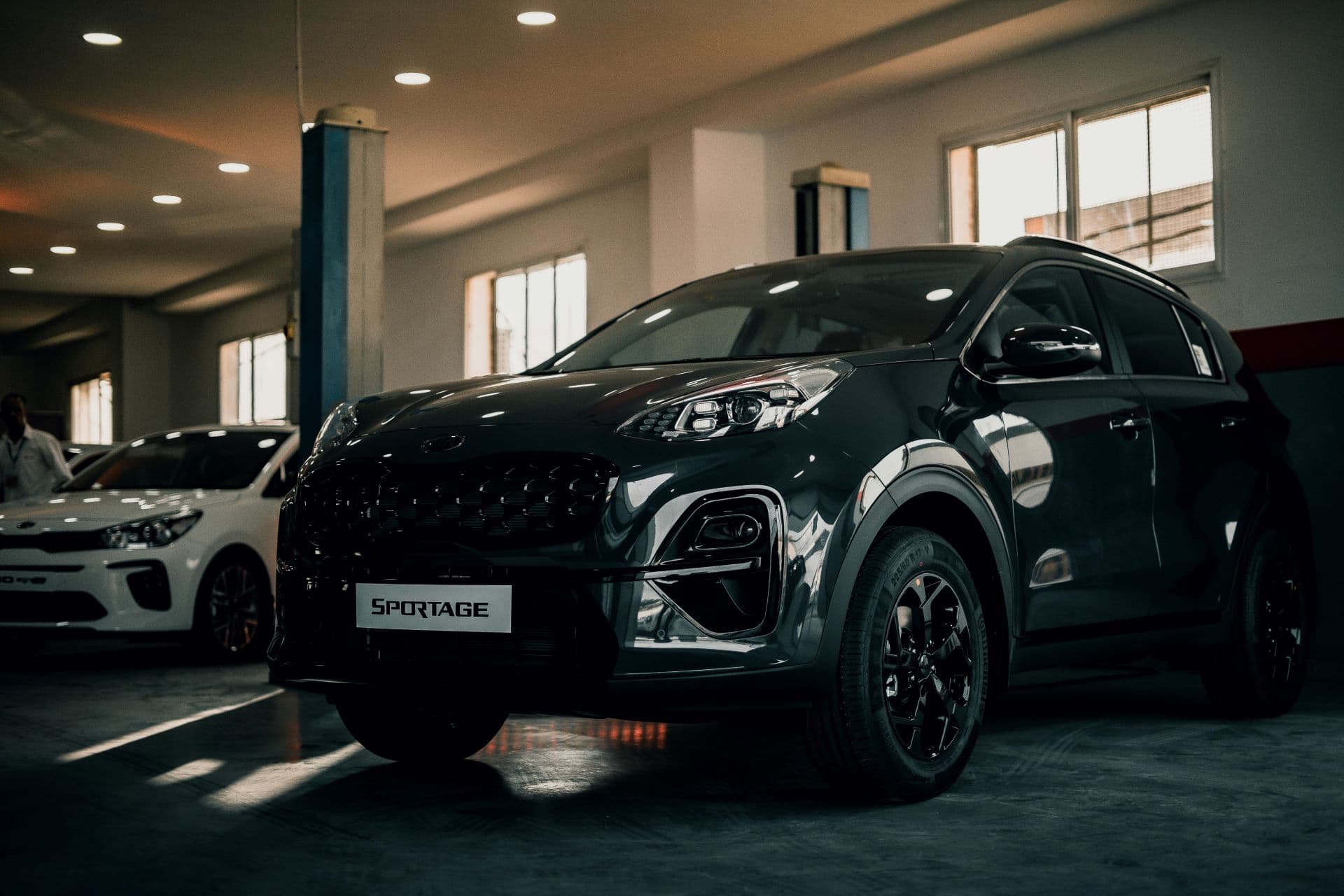
The New Engine Behind Automotive Words
There was a time when car advertising copy was forged in late-night agency sprints, surrounded by coffee cups, scribbled notes, and a singular obsession with “the perfect line.” Today, that scene has not disappeared, but it now shares space with something quieter, faster, and far less human in appearance. Generative AI systems are increasingly sitting in the creative driver’s seat, drafting the first lines of automotive campaigns before a human ever sharpens them into final form.
In automotive marketing, where speed-to-market can decide whether a model launch feels fresh or forgotten, AI has become more than a novelty. It is a production tool. It writes headlines, suggests taglines, and even reshapes tone variations for different buyer personas. Yet behind this acceleration sits a tension that marketing teams cannot ignore: efficiency is rising, but brand voice consistency is now under pressure in ways the industry has never experienced before.
The car itself may still be engineered in steel and silicon, but the story around it is increasingly built in tokens and prompts.
From Workshop Craft to Machine Draft
Automotive advertising has always been a craft discipline. Whether it was the rugged freedom of off-road SUVs or the precise sophistication of luxury sedans, copywriters historically shaped emotional landscapes around mechanical objects. Every word carried weight because every campaign had cost, time, and production constraints baked into it.
Generative AI has shifted that dynamic dramatically.
Instead of starting with a blank page, marketing teams now start with a spectrum of machine-generated drafts. A single prompt can produce dozens of variations:
- Urban-focused compact car messaging for young professionals
- Family-oriented safety narratives for crossover SUVs
- Performance-driven language for sports sedans
- Sustainability-first storytelling for electric vehicles
The difference is not just speed. It is volume. Where once a team might refine three headline options, they now sift through thirty or three hundred.
This abundance changes the role of the copywriter. They are no longer purely creators of first drafts. They are curators, editors, and most importantly, guardians of brand identity in a sea of algorithmic suggestion.
Efficiency as the New Competitive Advantage
In automotive marketing, timing is everything. A vehicle launch is not a single moment but a carefully orchestrated sequence: teaser campaigns, reveal events, dealership enablement, regional adaptations, and continuous digital retargeting.
Generative AI fits into this structure like a turbocharger bolted onto an already complex engine.
Campaign teams can now generate:
- Variant-specific copy for multiple trims of the same vehicle
- Regionally adapted messaging for different markets
- Rapid A/B testing variations for digital ads
- SEO-optimized landing page content for automotive searches
This reduces production cycles from weeks to days, sometimes hours. For brands operating in highly competitive segments like compact SUVs or electric mobility, that speed is not just convenient. It is strategic survival.
But efficiency introduces a subtle shift in creative behaviour. When output becomes abundant, selection becomes the bottleneck. Teams begin spending less time writing and more time deciding what not to use. That decision-making process becomes the new creative battleground.
The Fragile Architecture of Brand Voice
Every automotive brand has a voice, whether it is carefully documented in a style guide or simply understood by long-serving creative teams. It is the difference between a rugged off-roader that “conquers terrain” and a premium sedan that “glides through urban motion.”
Generative AI, however, does not inherently understand restraint. It understands patterns.
This creates a risk in automotive marketing: tone dilution. When prompts are not tightly controlled, AI systems can produce copy that feels technically correct but emotionally inconsistent. One headline may feel bold and adventurous, while the next feels clinical or overly generic.
Brand voice consistency becomes fragile not because AI is wrong, but because it is too flexible.
To manage this, automotive marketers are increasingly embedding constraints into their AI workflows. These include:
- Predefined tone libraries aligned to brand archetypes
- Prompt frameworks tied to specific vehicle positioning
- Human-in-the-loop review systems before publication
- Voice training datasets built from historical campaigns
In effect, brands are teaching machines not just what to say, but how to say it without breaking character.

When Creativity Becomes a Collaboration Loop
The most interesting shift in automotive copywriting is not replacement, but collaboration.
AI does not eliminate the writer. It multiplies their options.
A typical modern workflow in automotive marketing might look like this: a strategist defines the campaign objective, an AI system generates multiple narrative routes, a copywriter refines tone and emotional resonance, and a brand manager validates alignment with identity guidelines.
This creates a loop rather than a linear process. Ideas are no longer born once and refined forward. They are continuously regenerated, reinterpreted, and reshaped.
In some cases, AI even re-enters later stages of production. Performance data from live campaigns can be fed back into systems to generate improved variations. If a particular emotional angle performs better, the AI can produce additional copy variations in that direction almost instantly.
This feedback cycle turns automotive marketing into something closer to a living system than a fixed campaign.
The Risk of Homogenised Automotive Language
One of the quieter concerns emerging in automotive marketing circles is the risk of sameness. As more brands use similar generative tools trained on overlapping datasets, there is a possibility that car advertising begins to sound uniform.
Words like “dynamic,” “bold,” “sophisticated,” and “innovative” already saturate automotive copy. AI, if left unchecked, can reinforce these defaults rather than challenge them.
The danger is not incorrect messaging. It is indistinguishable messaging.
In a marketplace where multiple brands compete in identical segments, differentiation depends heavily on language texture. The difference between a vehicle that feels aspirational and one that feels forgettable often lives in subtle linguistic choices rather than product specifications.
This is where human oversight remains critical. Writers are increasingly responsible not just for crafting copy, but for ensuring linguistic diversity, emotional specificity, and narrative risk-taking.
Data-Driven Emotion in Automotive Storytelling
AI in automotive marketing does not operate in a vacuum. It is often trained or guided by performance data: click-through rates, engagement metrics, conversion behaviour, and audience segmentation insights.
This introduces a fascinating contradiction. Emotion, once considered the most human part of advertising, is now being shaped by statistical feedback loops.
For example, if data shows that safety-focused messaging performs better in certain regions for SUVs, AI systems will naturally bias towards that emotional framing in future copy generations. Over time, this can create highly optimised emotional narratives.
But optimisation is not the same as originality.
Automotive brands must therefore balance two forces:
- Data-informed emotional direction
- Creative disruption that breaks predictable patterns
Without disruption, campaigns become efficient but forgettable. Without data, they become expressive but ineffective. The modern copywriter sits precisely at this intersection, interpreting numbers while defending narrative surprise.
The Electric Vehicle Effect on Copywriting
Electric vehicles have introduced a new vocabulary into automotive marketing. Terms like “range,” “charging time,” “sustainability footprint,” and “regenerative performance” now sit alongside traditional descriptors of power and comfort.
AI systems excel at incorporating technical detail into structured copy. They can easily generate comparisons, explain specifications, and adapt messaging for different knowledge levels of audiences.
However, EV marketing presents a unique challenge: abstraction. Unlike combustion engines, where sensory language is abundant, electric mobility requires more conceptual storytelling.
This is where human writers often reclaim value. AI can describe efficiency, but humans are still better at translating silence into emotion, and range into freedom, and charging time into patience or inconvenience depending on positioning.
Automotive marketing for EVs therefore becomes a layered dialogue between precision and poetry.
The Dealer Floor Meets the Digital Brain
AI-generated copy does not live only in digital ads. It increasingly flows into dealership materials, brochures, CRM systems, and even conversational scripts used by sales teams.
A single vehicle launch might now generate:
- Online ad variants
- Email nurture sequences
- Dealer training summaries
- WhatsApp lead response templates
- Website product page descriptions
This creates a unified content ecosystem where messaging consistency becomes both easier and more important. Every touchpoint reinforces the same narrative, often derived from a shared AI-assisted content core.
Yet this also raises a subtle risk. If every piece of communication originates from the same generative source, there is a chance that customer interactions begin to feel templated rather than personal.
In automotive sales, perceived authenticity still matters. A customer walking into a dealership expects a human conversation, not an extension of a content model.
Where Human Writers Still Own the Road
Despite rapid adoption, AI has not replaced the strategic core of automotive copywriting. Instead, it has shifted where human value is most visible.
Writers are increasingly responsible for:
- Defining brand narrative direction
- Designing prompt frameworks and tone systems
- Editing for emotional precision and cultural nuance
- Ensuring legal and regulatory alignment in claims
- Injecting originality into AI-generated foundations
In practice, this means the blank page is no longer the challenge. The challenge is deciding what kind of thinking should guide the machine before it writes.
The most successful automotive campaigns now treat AI as a co-pilot, not a replacement driver. It can handle speed and scale, but humans still navigate meaning, identity, and risk.
The Future of Automotive Copy Is Layered, Not Linear
The evolution of AI in automotive marketing is not a simple story of automation replacing creativity. It is a layering of systems: data systems, language models, brand frameworks, and human editorial judgement all interacting in real time.
Future automotive campaigns will likely be built less like static narratives and more like adaptive language environments. Copy will shift dynamically based on audience, platform, and performance signals.
In that world, the role of the copywriter becomes closer to that of an architect of voice systems. They will not only write messages but design the conditions under which messages are generated.
And somewhere inside that system, AI will continue writing car ad copy at scale, rapidly iterating through possibilities while humans ensure that, despite the speed, the brand still sounds like itself.
Because in automotive marketing, the car may move fast, but the voice behind it still needs to feel grounded, deliberate, and unmistakably alive.
Breyten Odendaal
Specializing in high-performance automotive advertising and digital marketing solutions, delivering cutting-edge insights and the latest news shaping the automotive industry in South Africa.
More From Advertising
Automotive Digital Ads in South Africa: A Shift
Exploring how South Africa’s automotive advertising evolved from print and broadcast to data-driven, programmatic digital ecosystems.
The Video Shift in Car Buying Decisions in SA
Explore how video content shapes car purchase decisions in South Africa, comparing short-form and long-form strategies for automotive marketers.
Why Automotive Ads Must Think Like E-Commerce
Automotive ads in South Africa need e-commerce style conversion thinking to boost leads, optimise funnels, and improve dealership ROI.